
In Genesis 22, Did God Open the Door to the Conversation on Abortion/Child Sacrifice?
Genesis 22:2 ESV
2 He said, “Take your son, your only son Isaac, whom you love, and go to the land of Moriah, and offer him there as a burnt offering on one of the mountains of which I shall tell you.”
This might be one of the most unsettling commands in all of Scripture. It raises a profound and disturbing question for today: if God can command a father to sacrifice his child, what does say or permit about the controversial topic of abortion?
You don’t have to look very far to find critics, politicians, or “theologians” using this passage to argue that even the Bible treats children as expendable, negotiable or subject to the will of someone else. This ideal, although sounding primitive, has not remained in the ancient world.
So is Genesis 22 an open door or a closed on?
The Open Door argument goes something like this: a God who tests someone by asking them to kill their own son has, at minimum, treated a child’s life as negotiable. Based on this story we have an example that a child is something that can be offered, withheld, or demanded depending on divine will. If obedience to God can override the plain wrongness of killing a child, then a child’s life is not inviolable in itself. Every child’s life is contingent on someone else’s authority.
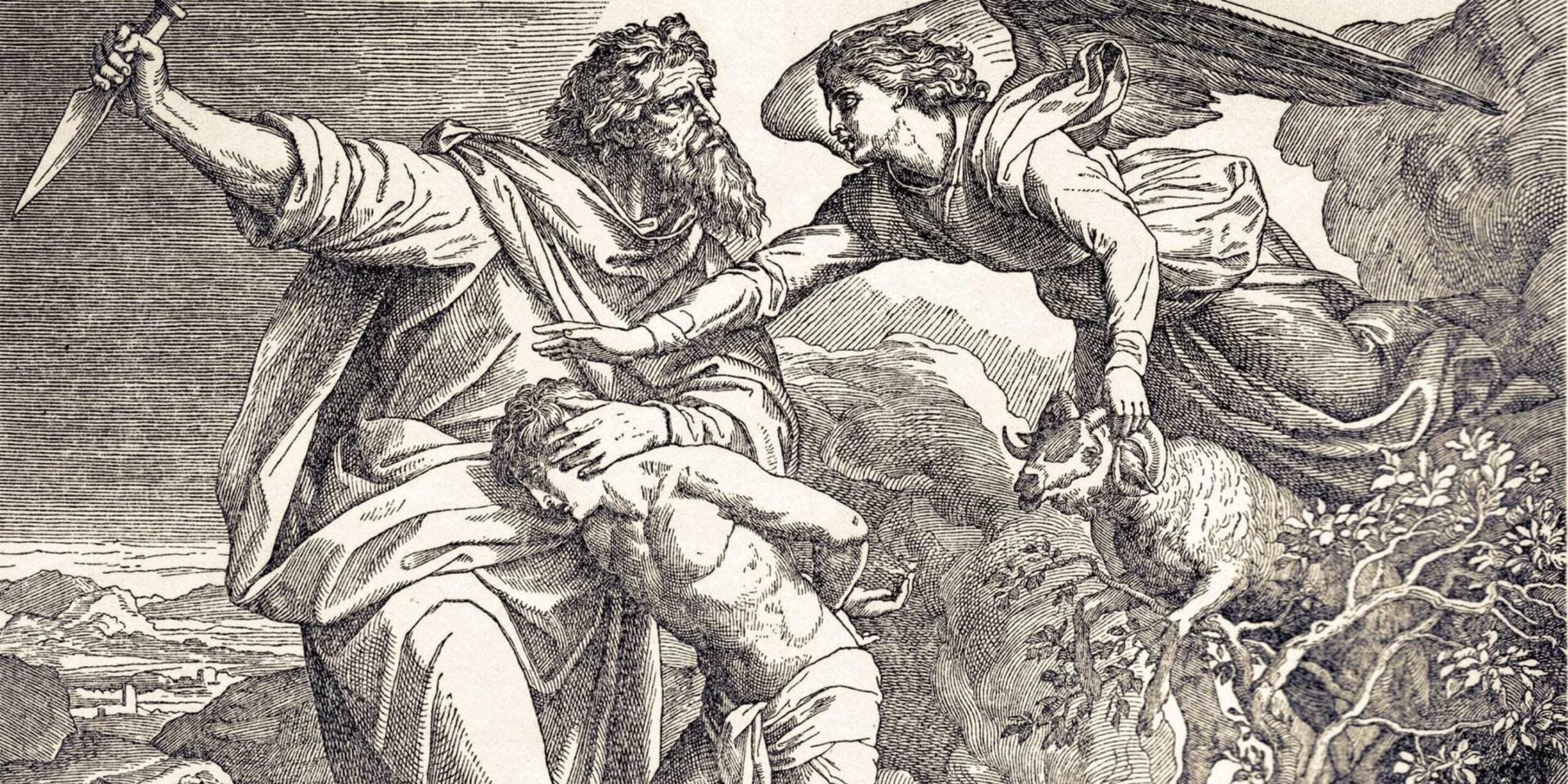
I mean, Abraham did raise the knife. He was willing and ready to go through with what God requested of Him.
Let’s take a look at what the text is actually doing in this story, in its entirety and contextually.
- The central idea of the story is about obedience that leads to an interruption, not completion
Genesis 22:12 ESV
He said, “Do not lay your hand on the boy or do anything to him, for now I know that you fear God, seeing you have not withheld your son, your only son, from me.”
The narrative doesn’t climax with the knife falling into Isaac’s chest. It climaxes with the angel of the LORD stopping Abraham mid-motion.
The whole shape of the story is built around God preventing the act. If the text wanted to endorse child sacrifice, this is a strange way to write it. The sacrifice never happens, and God is the one who stops it.
- The sacrifice was still necessary but God provided the substitute not Abraham
Genesis 22:8 ESV
8 Abraham said, “God will provide for himself the lamb for a burnt offering, my son.” So they went both of them together.
Abraham knew what God requested would have to be fulfilled but he had faith that there would be another way.
Genesis 22:13 ESV
13 And Abraham lifted up his eyes and looked, and behold, behind him was a ram, caught in a thicket by his horns. And Abraham went and took the ram and offered it up as a burnt offering instead of his son.
Substitution is the resolve of this passage.
The ram doesn’t die instead of nothing, it dies instead of the child.
This pattern is not isolated to Genesis 22 either. This is the same logic and theme that runs through the entire sacrificial system in the Old Testament and it is resolved ultimately at the cross. Thus making it abundantly clear a child sacrifice was never what God actually wanted because He had already laid the sacrificial plan that would culminate at the crucifixion.
John 1:29 ESV
The next day he saw Jesus coming toward him, and said, “Behold, the Lamb of God, who takes away the sin of the world!
- The neighbors of Israel actually practice child sacrifice but we see God clearly condemn it
This is completely missed if you read Genesis 22 in isolation.
Child sacrifice to Molech and other ancient Near Eastern deities was a real, documented practice in Canaan. Against that backdrop, the Torah doesn’t hedge:
Leviticus 18:21 ESV
21 You shall not give any of your children to offer them to Molech, and so profane the name of your God: I am the Lord.
Leviticus 20:2 ESV
“Say to the people of Israel, Any one of the people of Israel or of the strangers who sojourn in Israel who gives any of his children to Molech shall surely be put to death. The people of the land shall stone him with stones.
Deuteronomy 12:31 ESV
You shall not worship the Lord your God in that way, for every abominable thing that the Lord hates they have done for their gods, for they even burn their sons and their daughters in the fire to their gods.
Jeremiah 7:31 ESV
And they have built the high places of Topheth, which is in the Valley of the Son of Hinnom, to burn their sons and their daughters in the fire, which I did not command, nor did it come into my mind.
Micah 6:7-8 ESV
Will the Lord be pleased with thousands of rams, with ten thousands of rivers of oil? Shall I give my firstborn for my transgression, the fruit of my body for the sin of my soul?” He has told you, O man, what is good; and what does the Lord require of you but to do justice, and to love kindness and to walk humbly with your God?
- The life of a child whether in the womb or walking on the earth is sacred to God
Not only are children not expendable to the decision of man they sit directly under God’s direct protection. We can find a clear thematic connection between the value of the unborn and born throughout scripture. God’s word is not quiet on the sacredness of life.
Psalm 139:13-16
13 For you formed my inward parts; you knitted me together in my mother’s womb. 14 I praise you, for I am fearfully and wonderfully made. Wonderful are your works; my soul knows it very well. 15 My frame was not hidden from you, when I was being made in secret, intricately woven in the depths of the earth. 16 Your eyes saw my unformed substance; in your book were written, every one of them, the days that were formed for me, when as yet there was none of them.
Jeremiah 1:5
“Before I formed you in the womb I knew you, and before you were born I consecrated you; I appointed you a prophet to the nations.”
Luke 1:41-44
41 And when Elizabeth heard the greeting of Mary, the baby leaped in her womb. And Elizabeth was filled with the Holy Spirit, 42 and she exclaimed with a loud cry, “Blessed are you among women, and blessed is the fruit of your womb! 43 And why is this granted to me that the mother of my Lord should come to me? 44 For behold, when the sound of your greeting came to my ears, the baby in my womb leaped for joy.
Matthew 18:6 NIV
“If anyone causes one of these little ones—those who believe in me—to stumble, it would be better for them to have a large millstone hung around their neck and to be drowned in the depths of the sea.
Closing thoughts…
Genesis 22 is genuinely uncomfortable, and it should stay that way. If we flatten the tension the story and text lose their profound meaning. But we must read it, not our own terms or with blinders on to the clarity of the teachings and character of God found in the entire canon. Actively refusing to be diligent in understanding what the text is actually saying leads to dangerous conclusions and allowances.
God commands, God interrupts, and God provides the substitute.
If Genesis 22 teaches anything about how God regards a child’s life, it’s this: not that a child’s life is negotiable, but that God himself intervenes to make sure it isn’t.